Lessons from Harvard’s Leading Learning (HGSE – CSML)
One of the most powerful insights from Module 2 of Leading Learning in the Harvard Graduate School of Education’s Certificate in School Management and Leadership (CSML) program is that excellent schools integrate academic rigor with a culture of care. They intentionally build systems that support both instructional excellence and students’ moral, social, and emotional development.
This module, led by John J-H Kim (Harvard Business School) and Richard Weissbourd (Harvard Graduate School of Education), explores how school leaders can build strong instructional cultures while fostering communities grounded in empathy, fairness, and belonging.
At the heart of the module is the case study of Jody-Anne Jones, principal of North Star Clinton Hill Middle School in Newark, New Jersey, whose leadership demonstrates how disciplined systems, strong relationships, and continuous improvement can transform school culture and student outcomes.
Culture Is an Output of Systems
A common misconception in education is that school culture can simply be declared. Leaders write mission statements, articulate core values, and expect culture to follow.
However, one of the key ideas emphasized in this module is that:
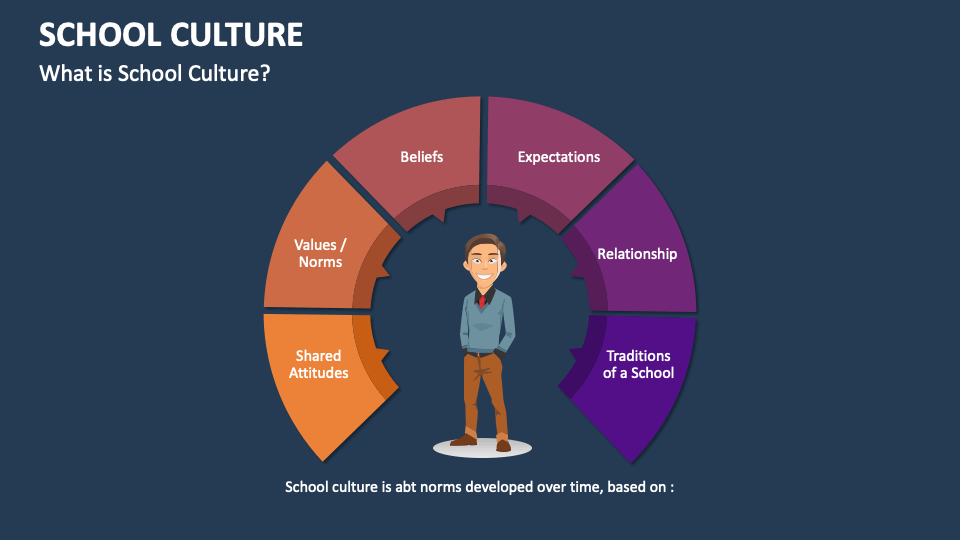
Culture is not something leaders announce—it is something that emerges from the systems and structures of a school.
According to John Kim, culture reflects the shared beliefs, norms, and behaviors that define “how things are done.” It becomes visible through daily practices, expectations, and routines.
This means that if leaders want to build a culture of excellence, care, and accountability, they must design systems that consistently reinforce those values.
Diagnosing Cultural Inconsistencies
When Jody-Anne Jones began closely examining the culture of Clinton Hill, she noticed an important problem: inconsistency across classrooms.
Some teachers had strong instructional routines and high expectations for participation. Students in these classrooms were engaged and accountable.

In other classrooms, however:
- Expectations for behavior varied.
- Participation norms were inconsistent.
- Core values were not always reinforced.
As students moved from class to class, they encountered different standards and different learning environments, creating confusion and uneven engagement.
This diagnosis revealed a critical leadership challenge:
A school cannot sustain a strong culture if expectations vary across classrooms.
Instructional Culture: The Power of Consistency
One concrete example of this inconsistency involved the practice of cold calling.
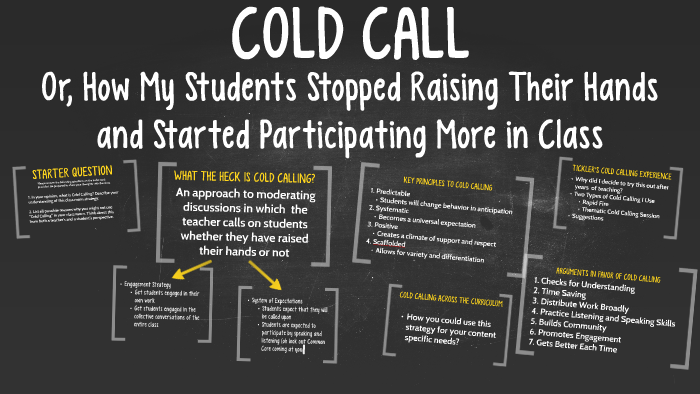
In some classrooms, teachers called on students randomly, ensuring that every student remained engaged and prepared to participate.
In other classrooms, teachers relied only on volunteers raising their hands. This allowed some students to disengage without consequences.
While the difference may seem small, its impact on culture was significant.
Cold calling reinforced a shared message:
- Everyone is expected to think.
- Everyone is accountable for learning.
- Participation is a norm, not an option.
Inconsistent instructional practices send mixed signals about expectations.
For Jones, the solution was clear: instructional norms must be aligned across classrooms.
Understanding the Agreement Matrix
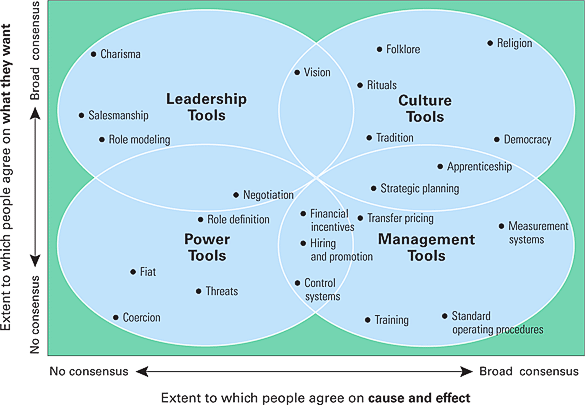
To guide leadership decisions, the course introduces an important framework: the Agreement Matrix, developed by Clayton Christensen, Howard Stevenson, and Matt Marx.
This matrix examines two key questions in an organization:
- Do people agree on the goals?
- Do people agree on how to achieve them?
Depending on the level of agreement, leaders must use different tools:
| Situation | Leadership Approach |
|---|---|
| Agree on goals but not methods | Leadership tools (vision, persuasion) |
| Agree on methods but not goals | Management tools (procedures, systems) |
| Agree on both | Culture tools (traditions, rituals) |
| Agree on neither | Power tools (directive leadership) |
Clinton Hill operated in a high-agreement context, meaning teachers largely agreed on both the mission and the methods of instruction. In such settings, leadership focuses on execution and consistency.
Building a Culture of Caring
While instructional consistency was one focus, Jones also addressed another crucial dimension: the culture of care within the school.
Richard Weissbourd’s research emphasizes that caring school cultures emerge through relationships and everyday interactions, not simply through policies.

A caring culture includes:
- Adults who know students personally
- Systems that ensure students feel valued
- Expectations that students care for one another
- Conversations about fairness, justice, and empathy
In many schools, students perceive that achievement matters more than caring. Weissbourd’s research shows that even when educators claim caring is a priority, students often experience a different reality.
Bridging this gap requires intentional leadership.
The Power of “Little Actions”

One of the most powerful strategies Jones used was deceptively simple: small daily actions.
Each morning she:
- Walked through the building
- Greeted teachers personally
- Asked about their families
- Checked how they were doing
These moments were not casual—they were deliberate acts of leadership designed to make teachers feel seen and valued.
When teachers feel cared for, they are far more likely to extend that same care to students.
Similarly, teachers greet students at the classroom door, learn to pronounce names correctly, and celebrate birthdays and milestones.
Small actions, repeated consistently, shape culture.
Expanding Students’ “Circle of Concern”
Another key concept from Weissbourd’s work is the idea of a “circle of concern.”
Most people naturally care about those closest to them—friends, family, or people similar to themselves.
However, one of the goals of education is to help students expand that circle, developing empathy for those who are different from them.
Clinton Hill accomplishes this through structured practices such as Community Circle, where students:
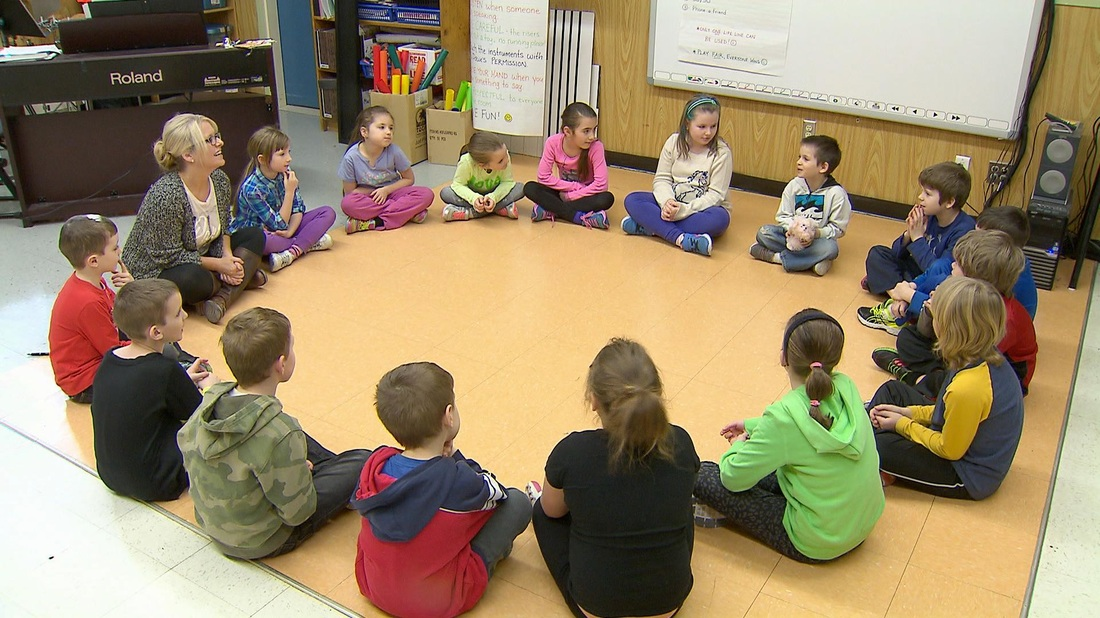
- Gather each morning
- Celebrate achievements
- Discuss current events
- Explore social issues
- Share perspectives
These conversations allow students to engage with complex topics and understand multiple viewpoints.
Through this practice, character development becomes part of the instructional culture, not a separate program.
Improving Classroom Discourse
A later challenge at Clinton Hill focused on student discourse.
Jones asked critical questions:
- Are students building on each other’s ideas?
- Are they using precise academic vocabulary?
- Are they challenging ideas respectfully?
Research shows that classroom discussion improves learning, yet most classroom time is dominated by teacher talk, often accounting for 70–80% of instructional time.

To address this gap, Jones:
- Conducted classroom walkthroughs
- Created a discourse rubric
- Designed professional development
- Introduced clear expectations for student dialogue
Teachers were coached to help students:
- Address each other by name
- Restate ideas before responding
- Elaborate with evidence
- Build on previous contributions
Over time, these habits transformed classroom conversations.
Continuous Improvement Through PDCA
Another key framework used at Clinton Hill was the PDCA cycle:
Plan
Identify the problem and analyze data.
Do
Implement a strategy or intervention.
Check
Study results and gather evidence.
Act
Refine the approach based on findings.
Rather than treating improvement as a one-time initiative, the school embedded continuous cycles of testing and learning.
This disciplined approach allowed the school to strengthen instruction systematically.
From Speaking to Writing
Once student discourse improved, the leadership team noticed another gap:
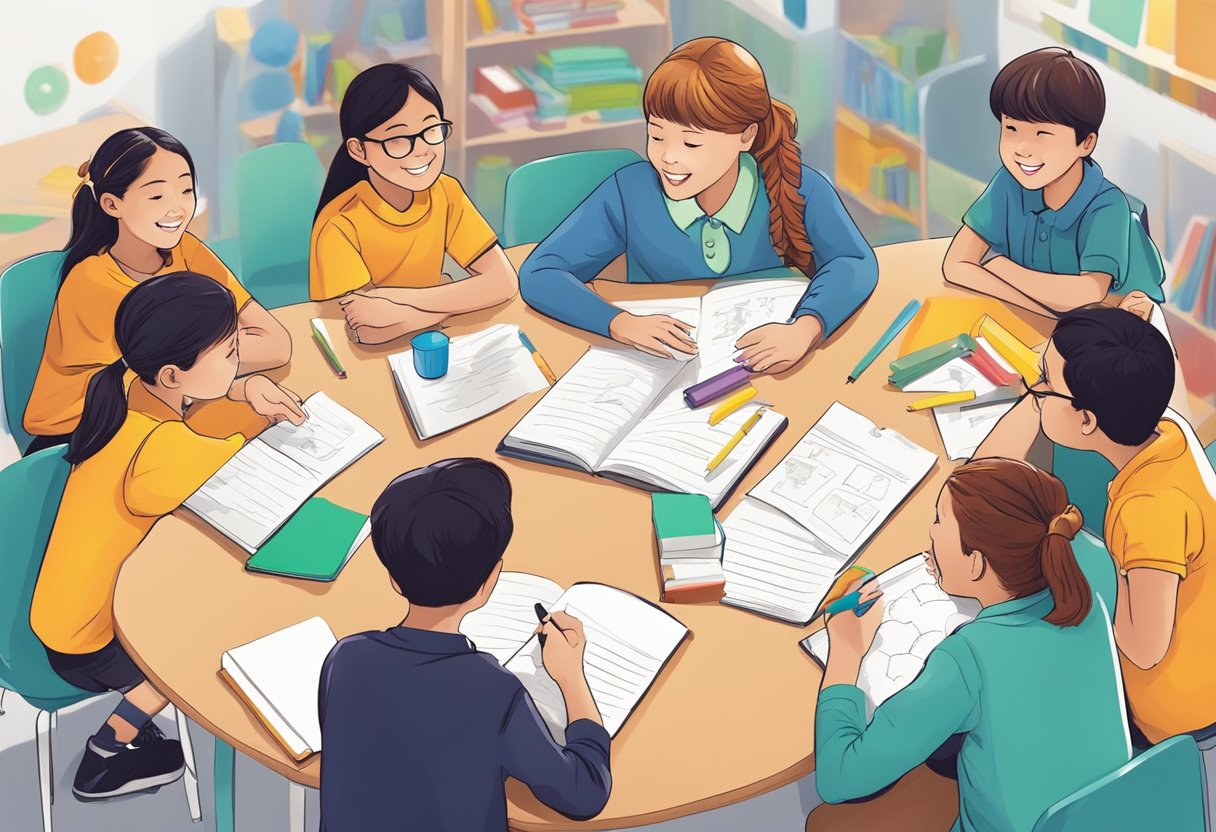
Students could express ideas verbally, but they struggled to translate that thinking into writing.
Instead of ignoring the issue, Jones used assessment data to identify specific writing weaknesses and introduced:
- targeted reteach lessons
- model essays
- revision cycles
- explicit instruction on evidence and analysis
Improvement became layered and iterative.
Success simply led to the next challenge.
The Result: A School Where Excellence and Care Coexist

The results of this work are impressive.
At Clinton Hill:
- 80% of students meet or exceed expectations in English
- 68% meet or exceed expectations in math
These scores significantly outperform district averages.
But the school measures success in broader ways as well.
Students are recognized for:
- grit
- caring
- responsibility
- courage
- academic achievement
The goal is not simply high test scores, but graduates who are prepared to contribute to their communities and pursue meaningful futures.
Final Reflection
One of the most important lessons from this module is that instructional excellence and a culture of caring are not competing priorities.
They reinforce one another.
When students feel respected, valued, and challenged:
- discussions become richer
- relationships become stronger
- academic engagement increases
Effective school leadership therefore requires designing systems that support both learning and humanity.
The real challenge is not deciding whether to pursue both.
The challenge is learning how to build the systems that make both possible.
 Ramazan Dicle