Insights from Harvard’s CSML – Module 2: Creating the Conditions for Adaptive Work
School leadership is rarely about having the right answers. More often, it is about creating the conditions where a community can learn its way toward better solutions.
As part of my Certificate in School Management and Leadership (CSML) at the Harvard Graduate School of Education, the second module of Leading Learning explores how leaders can mobilize communities to address complex challenges through adaptive leadership.
While technical problems can be solved with expertise, adaptive challenges require people to change their beliefs, behaviors, and ways of working. In schools, this often means shifting instructional culture, confronting uncomfortable truths, and learning together.
Below are some of the key leadership insights from this module.
1. Adaptive Thinking: Change Without Losing What Matters
One of the central ideas in adaptive leadership is that effective change preserves what works while improving what does not.
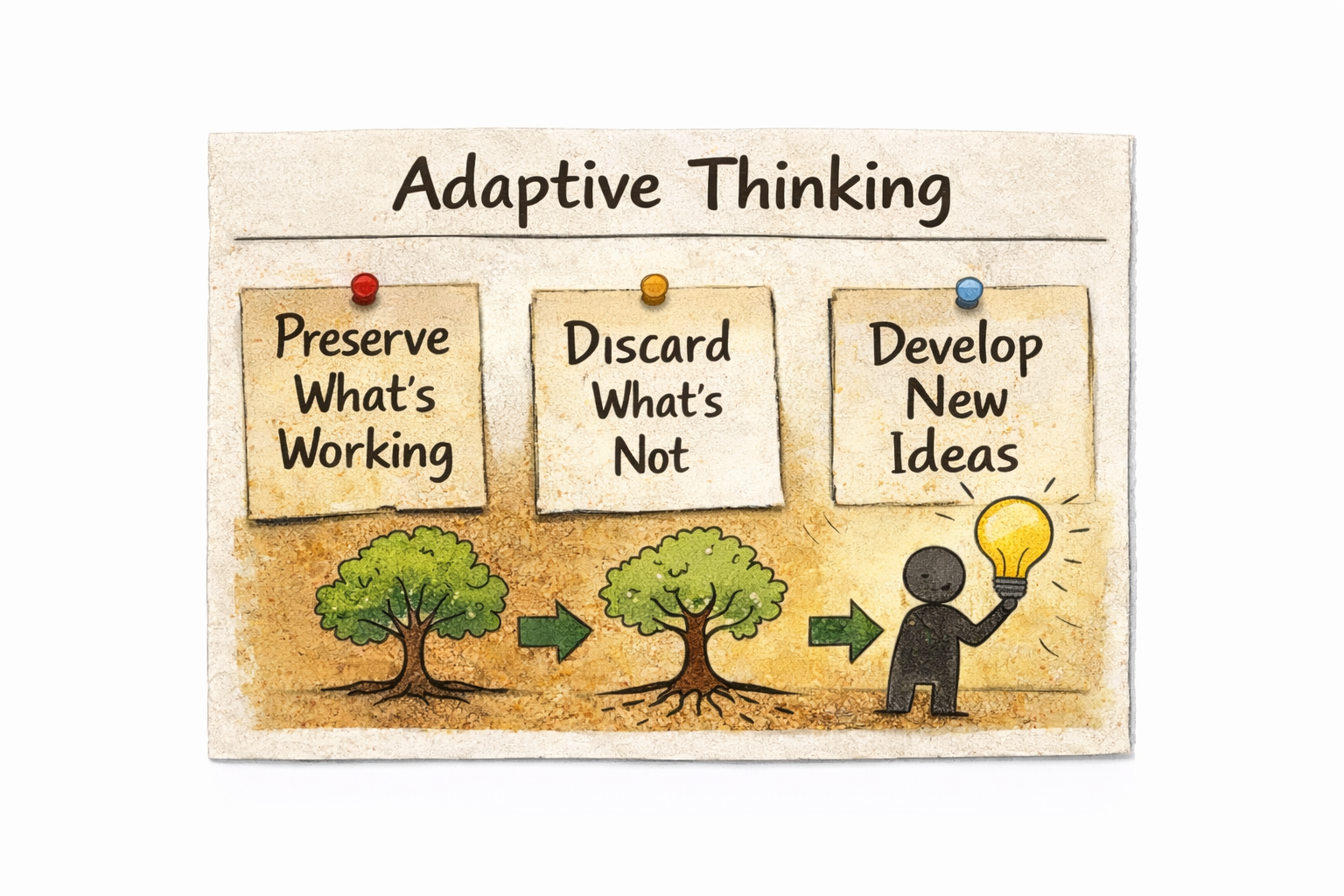
Rather than replacing everything, adaptive thinking asks leaders to carefully distinguish:
- What must be preserved
- What must be discarded
- What must be developed
This idea mirrors evolution in nature: most DNA remains intact while small variations create new capabilities.
In schools, this means leaders should not rush to impose sweeping reforms. Instead, they should begin by listening and diagnosing.
At Peachtree Ridge High School, a principal named Jeff approached change by first observing the school’s strengths before introducing innovation. He realized that expanding access to advanced learning required building on existing instructional practices rather than replacing them entirely.
This approach builds trust because teachers feel that their expertise and experience are respected, not discarded.
2. The Holding Environment: Creating Safety for Difficult Learning
Adaptive work is challenging because it pushes people beyond their current competence. To support this process, leaders must create what Heifetz calls a holding environment.
A holding environment is a network of relationships that enables people to stay engaged in difficult work.
Without such an environment, people withdraw, avoid the problem, or resist change.
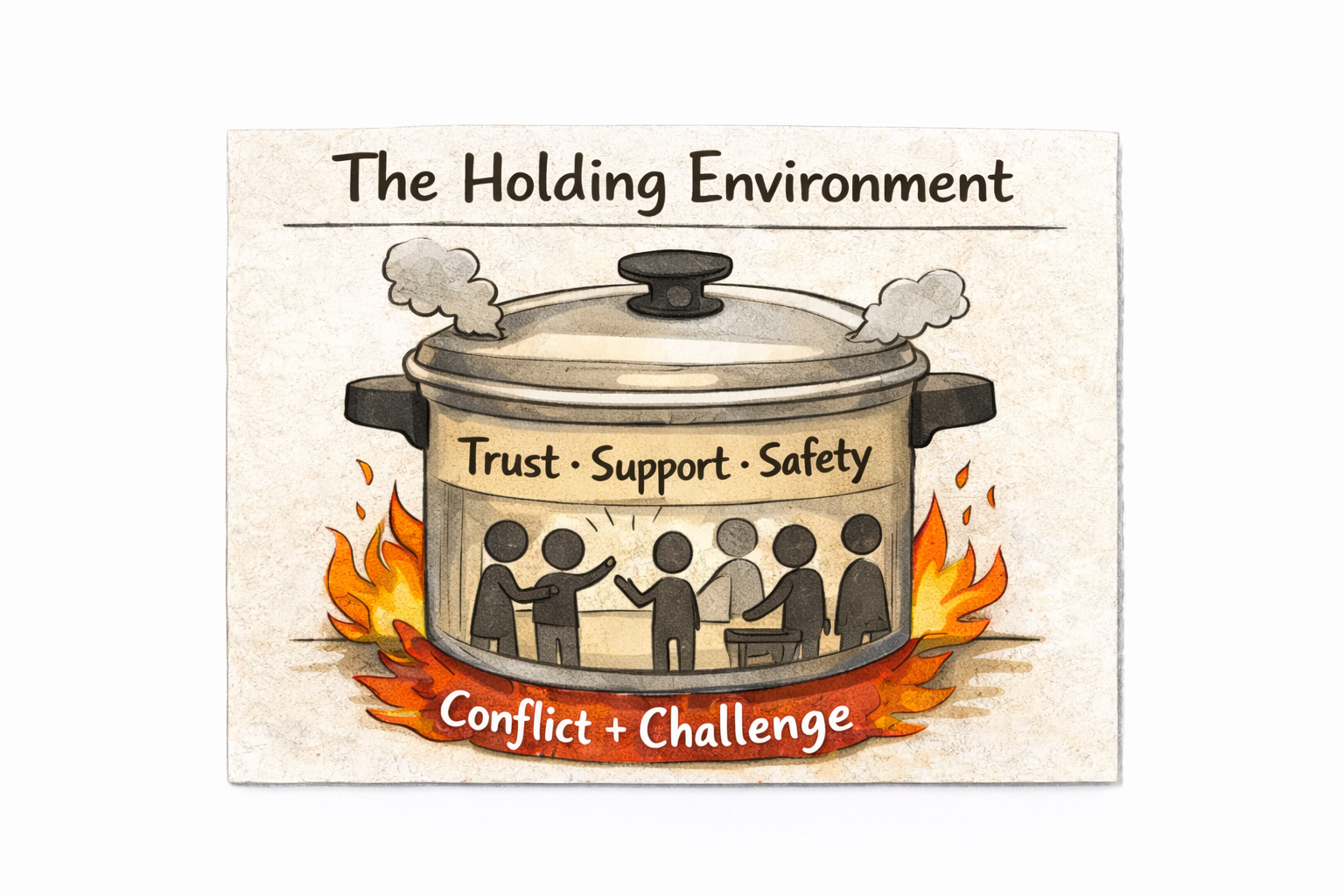
In schools, a strong holding environment is built through:
- Trust
- Shared values
- Professional relationships
- Psychological safety
A useful metaphor used in the course is the pressure cooker.
Adaptive change requires heat — tension, disagreement, and challenge — but the container must be strong enough to hold that pressure. When trust is strong, schools can engage in difficult conversations without relationships breaking down.
3. Trust: The Vertical and Horizontal Bonds
Trust forms the foundation of the holding environment.
The course distinguishes between two types of trust:
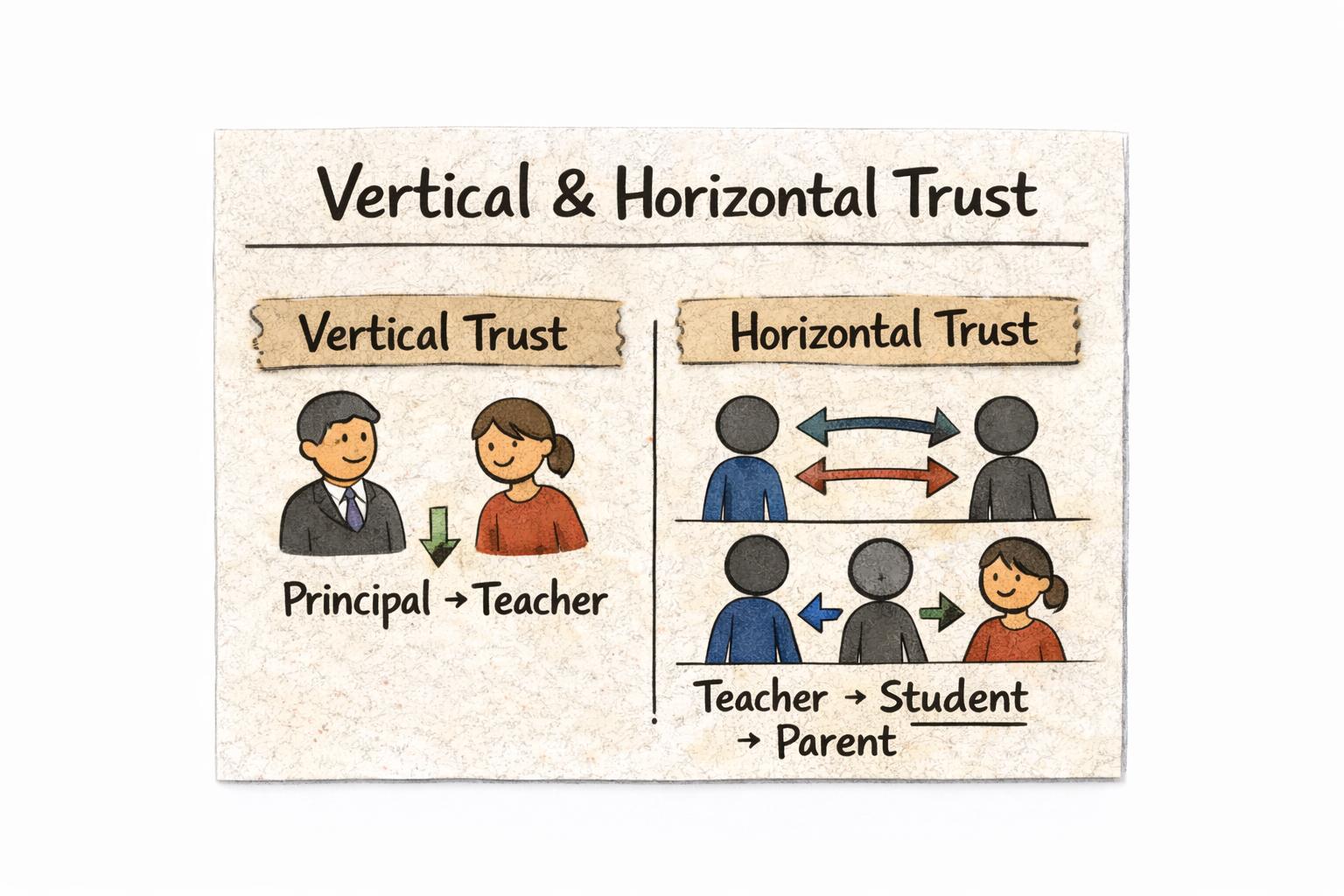
Vertical Trust
Trust between authority figures and others in the organization.
Examples include:
- Principal → teachers
- Teacher → students
Vertical trust is anchored in leadership credibility and institutional structures.
Horizontal Trust
Trust between peers and colleagues.
Examples include:
- Teacher → teacher
- Student → student
- Teacher → parent
Horizontal trust creates social capital, allowing collaboration and shared learning.
Strong schools cultivate both forms of trust simultaneously. Without them, adaptive work becomes nearly impossible.
4. Distributing Leadership: Finding Allies
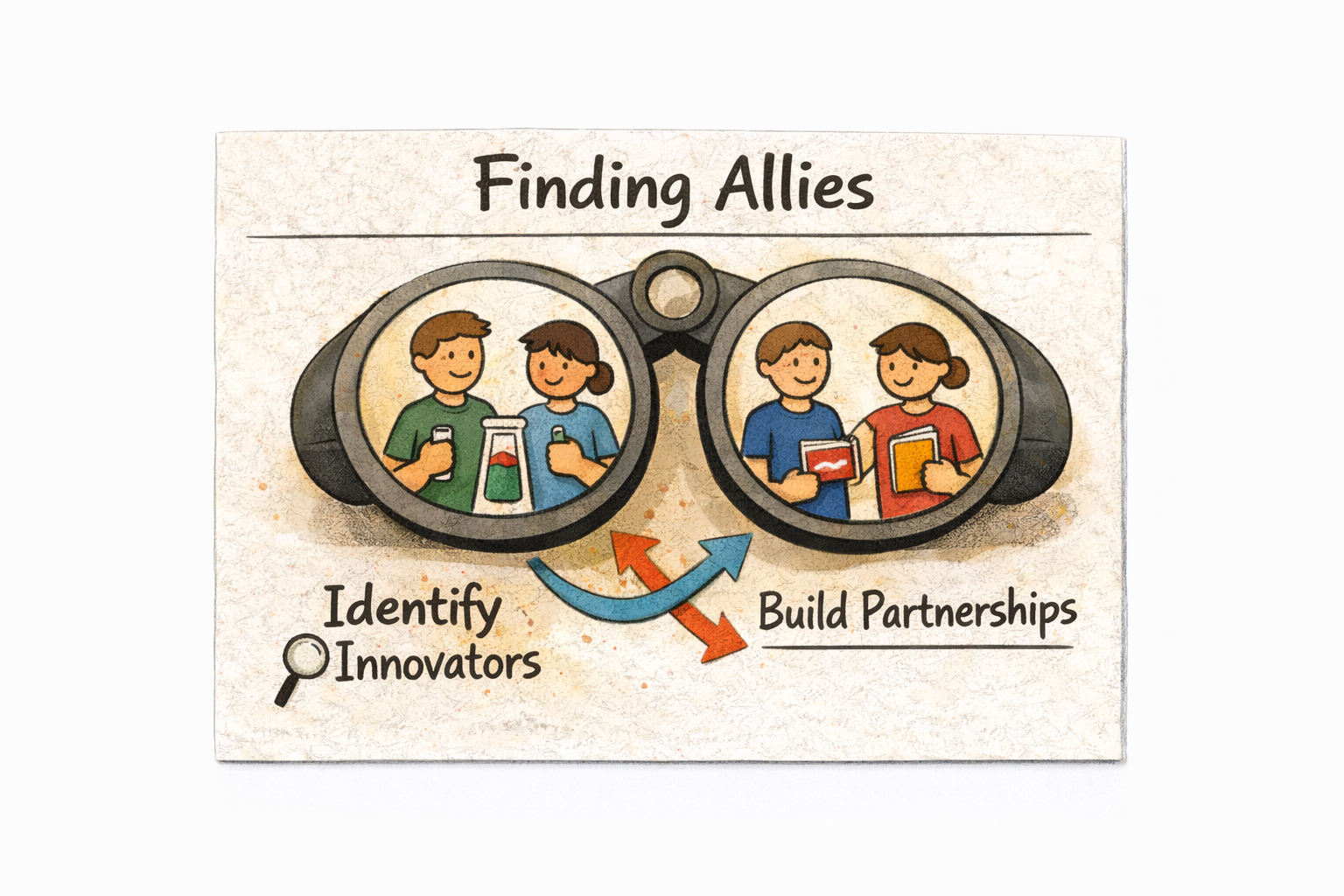
Adaptive challenges cannot be solved by one leader alone.
Effective leaders identify allies — people in the community who are ready to experiment and move forward.
These allies often become early innovators who test new ideas.
At Peachtree Ridge High School, Jeff identified two teachers — one in biology and one in language arts — who were passionate about integrating STEM and literacy. Their collaboration eventually grew into a new interdisciplinary program called SPIRE.
This illustrates a key principle:
Innovation often begins with small groups of motivated people.
Leadership involves giving them permission, support, and space to experiment.
5. Start Small: The Experimental Mindset
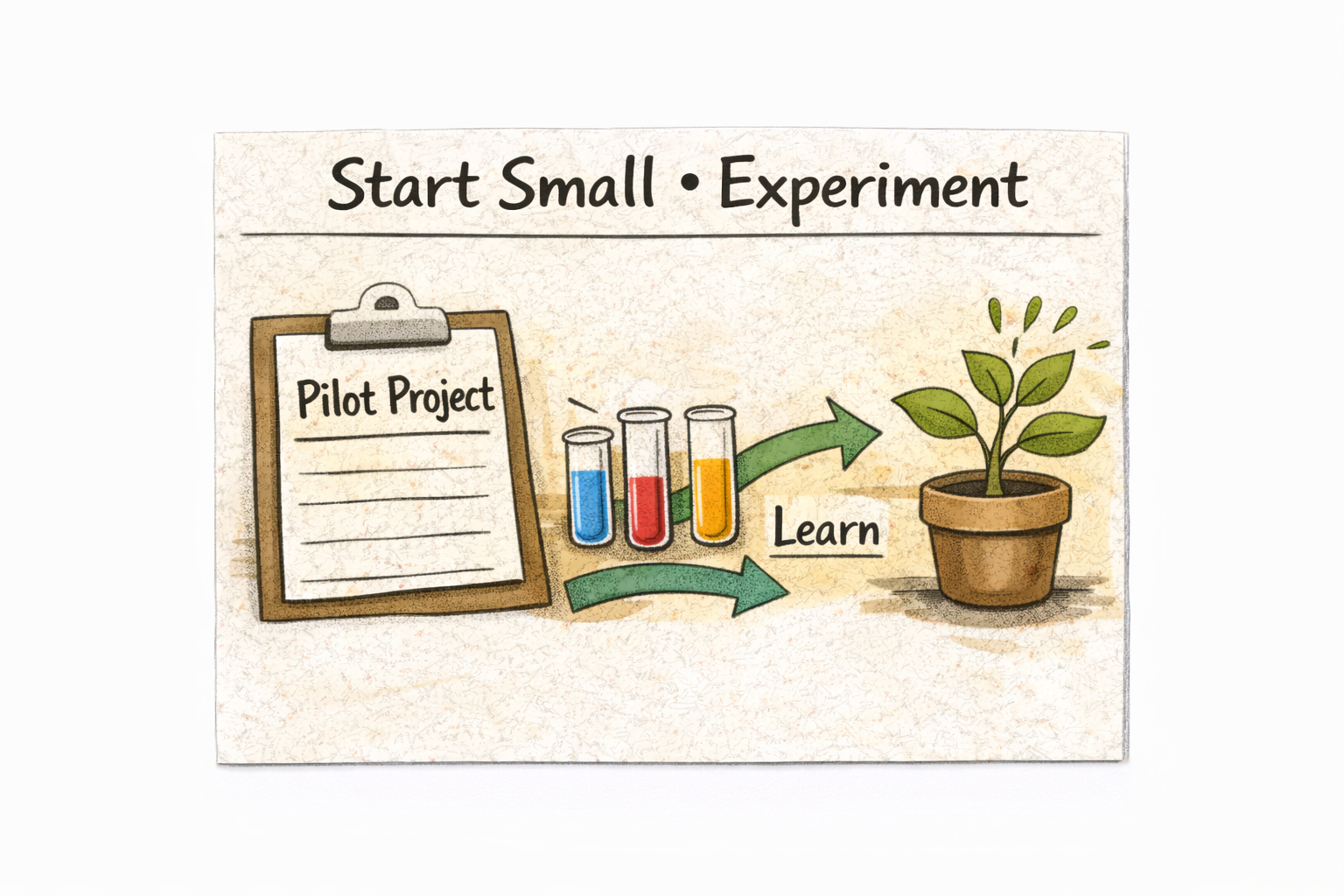
Adaptive leadership embraces experimentation.
Rather than implementing large-scale reforms immediately, leaders should begin with small pilot initiatives.
This approach allows schools to:
- Test ideas
- Learn from failure
- Adjust strategies
- Build momentum gradually
The course describes this as an experimental mindset — treating solutions as hypotheses rather than final answers.
In education, where uncertainty is constant, experimentation is not a weakness; it is a necessary leadership strategy.
6. Celebrating Small Wins

Sustaining adaptive work requires motivation.
One effective strategy is recognizing small wins.
Small successes:
- Build credibility
- Increase morale
- Encourage wider participation
For example, when early results from the SPIRE program showed student progress comparable to honors-track classes, the leadership team celebrated these outcomes to maintain momentum.
These incremental achievements create the confidence needed to sustain long-term change.
7. Balcony and Dance Floor Leadership
One of the most powerful metaphors in adaptive leadership is the movement between the dance floor and the balcony.
On the dance floor, leaders are actively engaged in daily work.
On the balcony, leaders step back to observe patterns, relationships, and dynamics.
Effective leaders constantly move between these two perspectives:
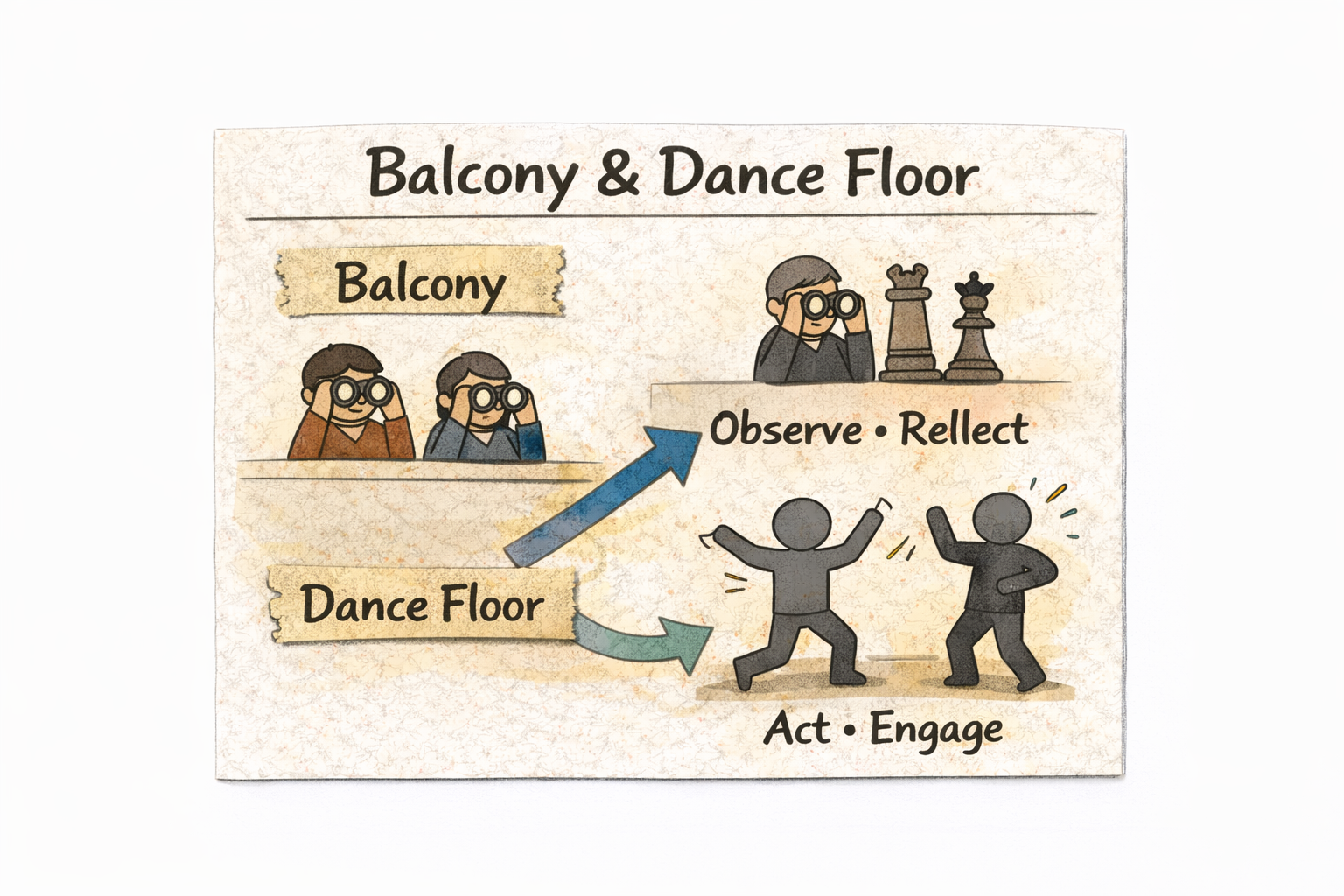
Dance floor:
- Action
- Interaction
- Implementation
Balcony:
- Observation
- Reflection
- Strategy
This ability to step back and interpret events allows leaders to detect underlying issues — what the course calls “the song beneath the words.”
8. Working with Skeptics and Dissenters
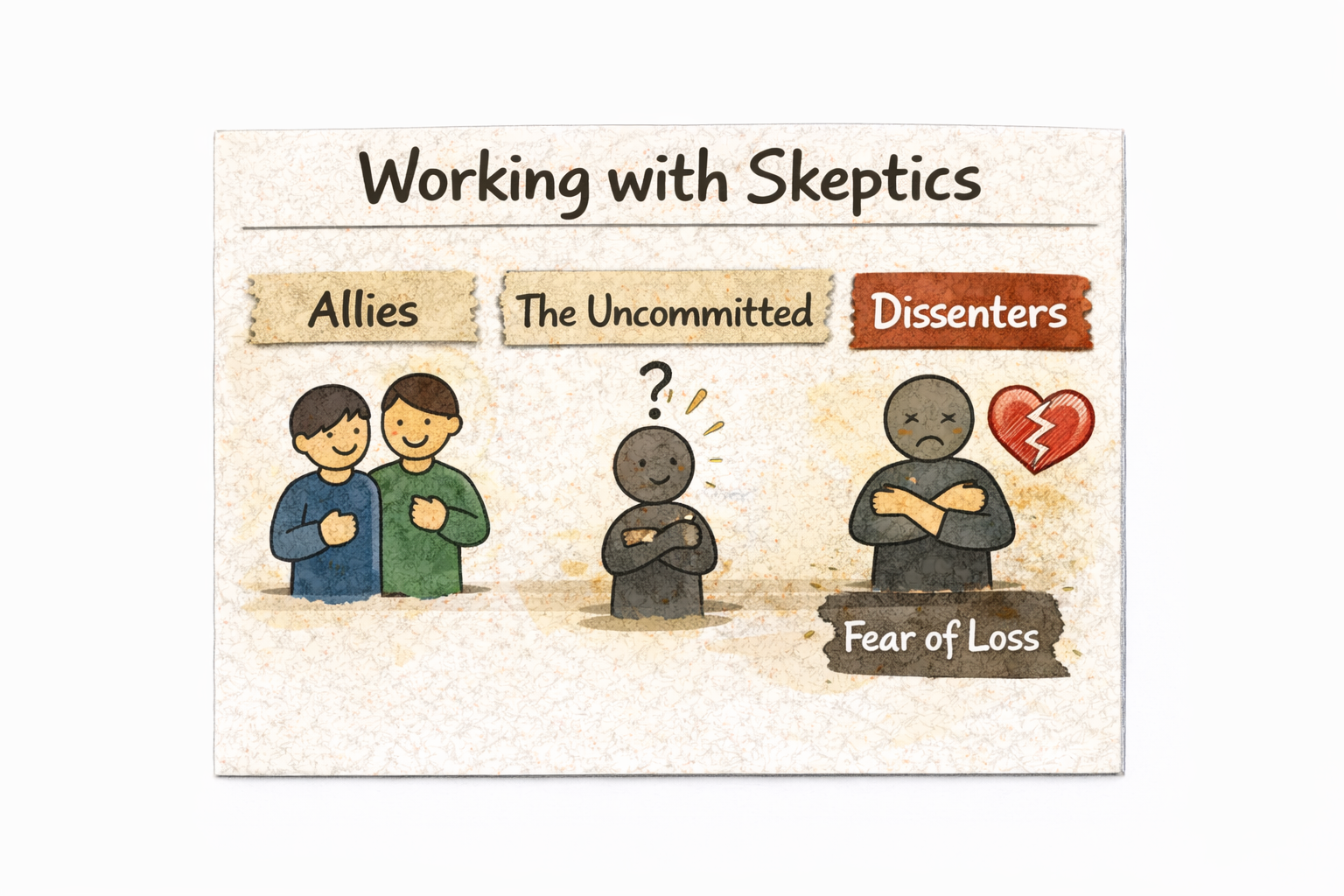
Not everyone will embrace change immediately.
Adaptive leadership identifies three groups:
- Allies
- The uncommitted
- Dissenters
The uncommitted often represent the largest group, and leaders must engage them carefully.
Resistance is rarely about change itself. More often, it reflects fear of loss — loss of competence, identity, status, or certainty.
Acknowledging these losses openly builds empathy and trust.
In many cases, skeptics become strong supporters once they feel heard and respected.
9. Managing the Heat of Change
Adaptive work inevitably creates tension.
The course describes leadership as managing the thermostat — keeping the system within the productive zone of disequilibrium.
Too little tension:
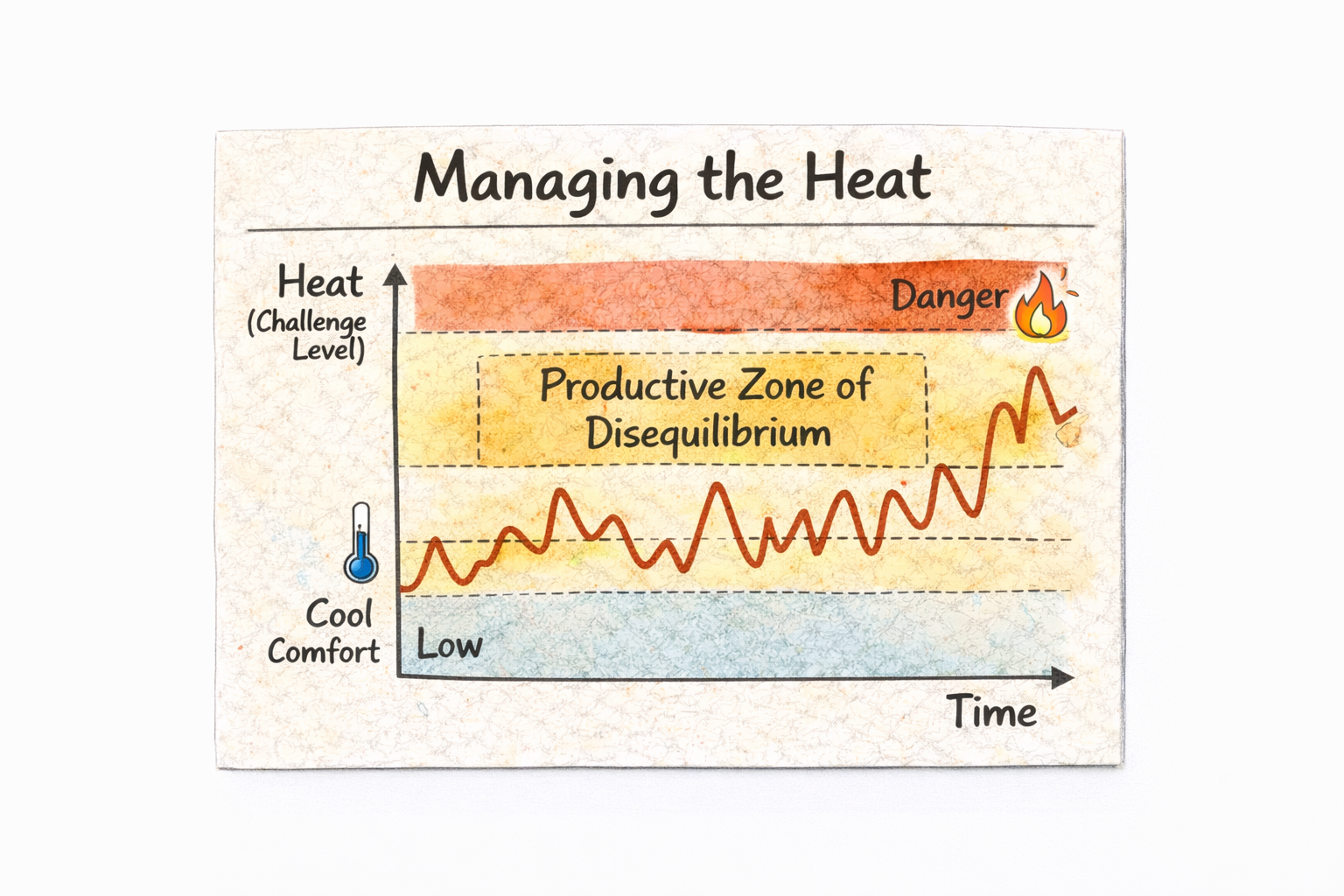
- No change occurs.
Too much tension:
- People become overwhelmed and disengage.
Effective leaders adjust the heat by:
Raising the temperature
- Highlighting difficult issues
- Surfacing hidden conflicts
Lowering the temperature
- Slowing the pace
- Providing structure
- Reconnecting people to shared values
Balancing this tension is one of the most complex skills in leadership.
10. Keeping Your Spirit in the Game
Finally, the course reminds leaders that adaptive leadership is emotionally demanding.
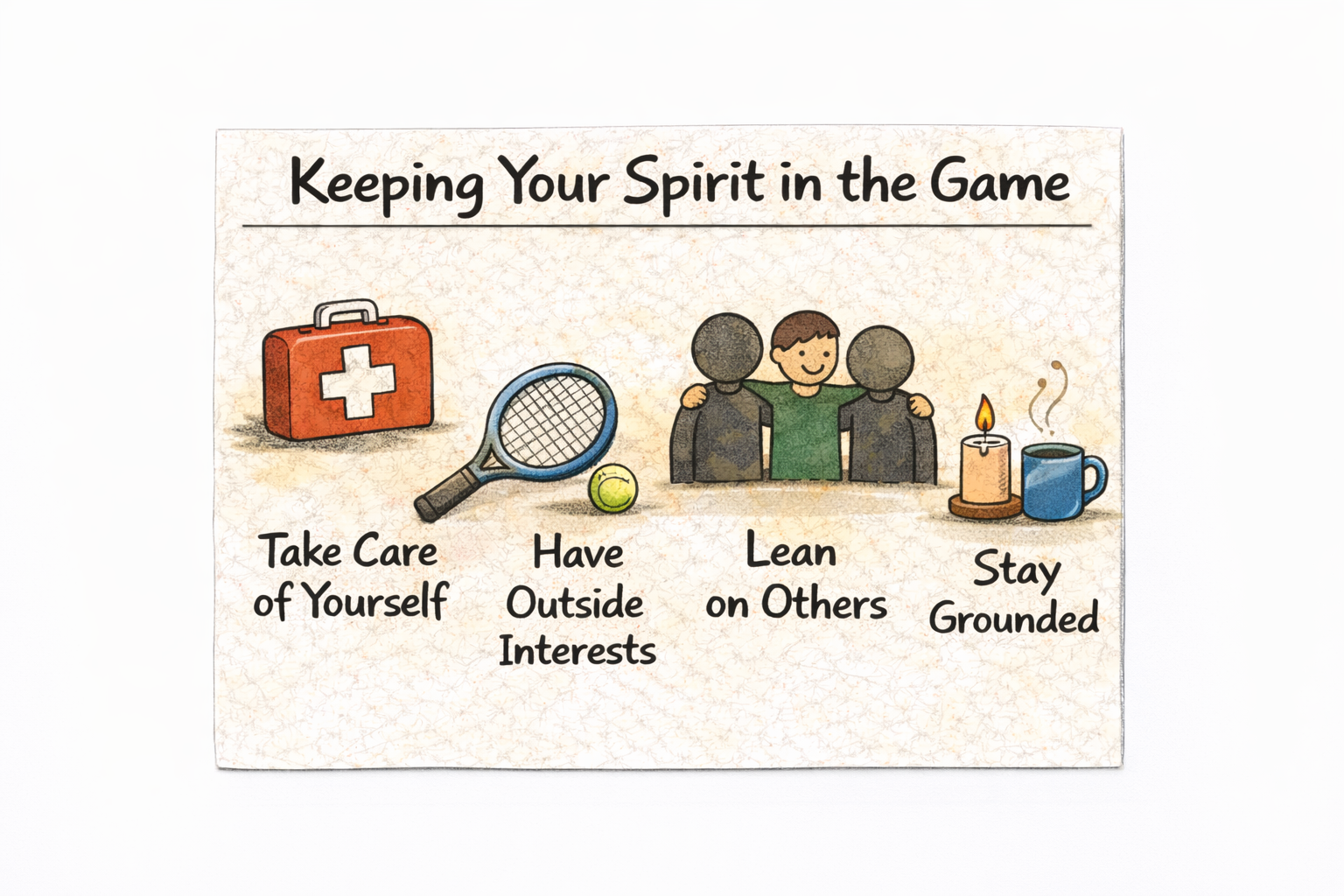
To sustain themselves, leaders need:
- Confidants outside the workplace
- Personal sanctuaries
- Regular restorative practices
Leaders must also learn to separate their identity from their role.
People often react to the position you represent, not the person you are.
Understanding this helps leaders remain grounded and resilient.
Final Reflection
Adaptive leadership is not about quick fixes.
It is about mobilizing people to learn their way through complexity.
Schools improve not when leaders impose answers, but when they create environments where teachers, students, and communities can experiment, reflect, and grow together.
For me, studying these ideas through the CSML program at Harvard Graduate School of Education has reinforced an important truth:
Leadership is less about control and more about cultivating the conditions where meaningful change becomes possible.
 Ramazan Dicle