 At the first weekend of August 2011, Copenhagen has hosted one of the largest Culture events of the year: Kulturhavn (Cultural Harbour) Fest 2011.
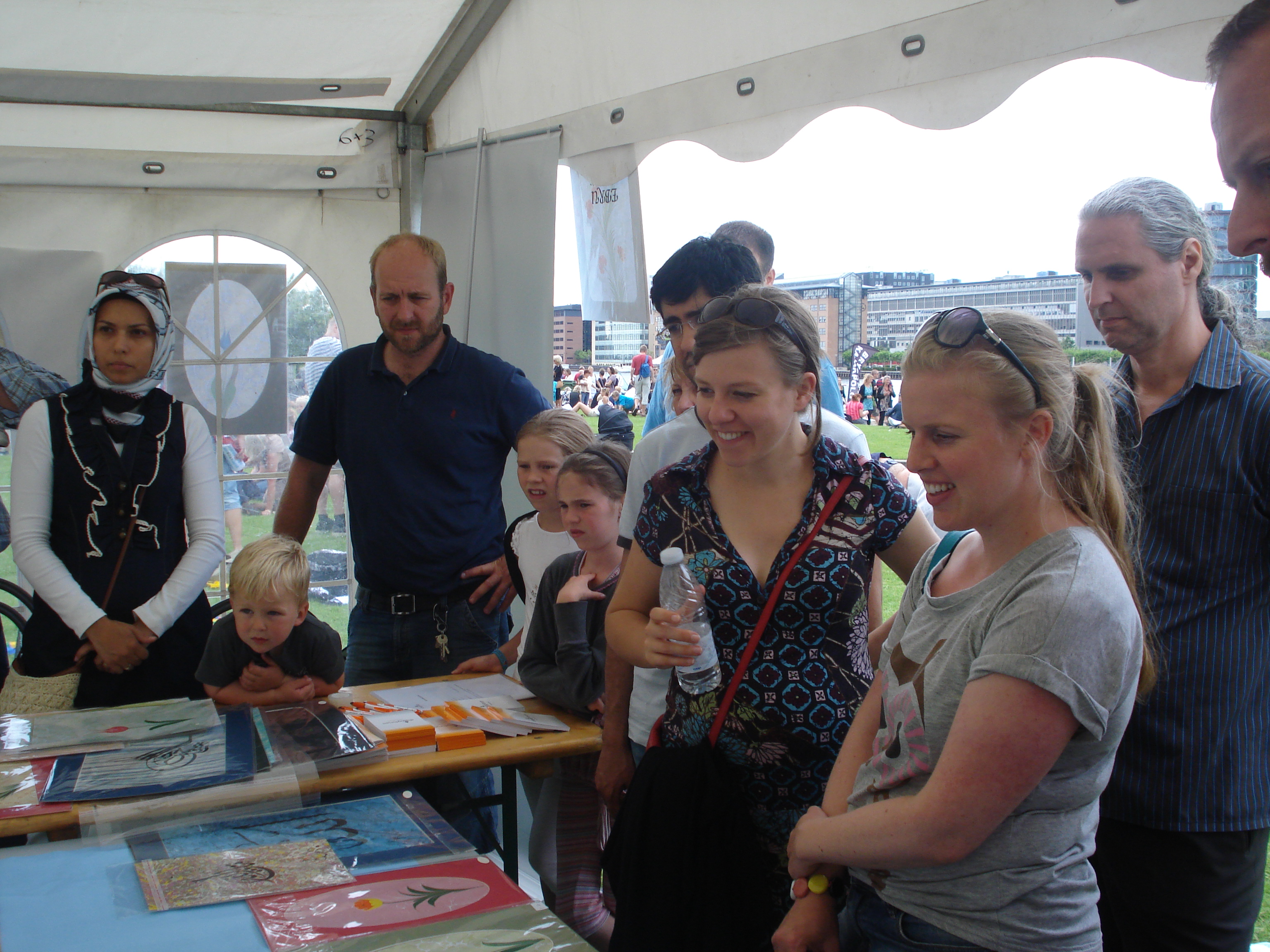
Cultural and leisure time activities were made available throughout the harbour for the citizens of Copenhagen, tourists and whoever wished to participate in or get acquainted with the cultural life of Copenhagen. CULTURAL HARBOUR means three days of dance, music, theatre, artistry and a variety of sporting events, in the harbour as well as on the quay – all activities are free of charge.
I, myself, enjoyed a lot in participating and watching the festivities. Therefore, I want to thank all of the people who organized, participated and involved in Kulturhavn 2011. It proved to us all, the toursists and also the citizens, that Copenhagen is full of life and lust.

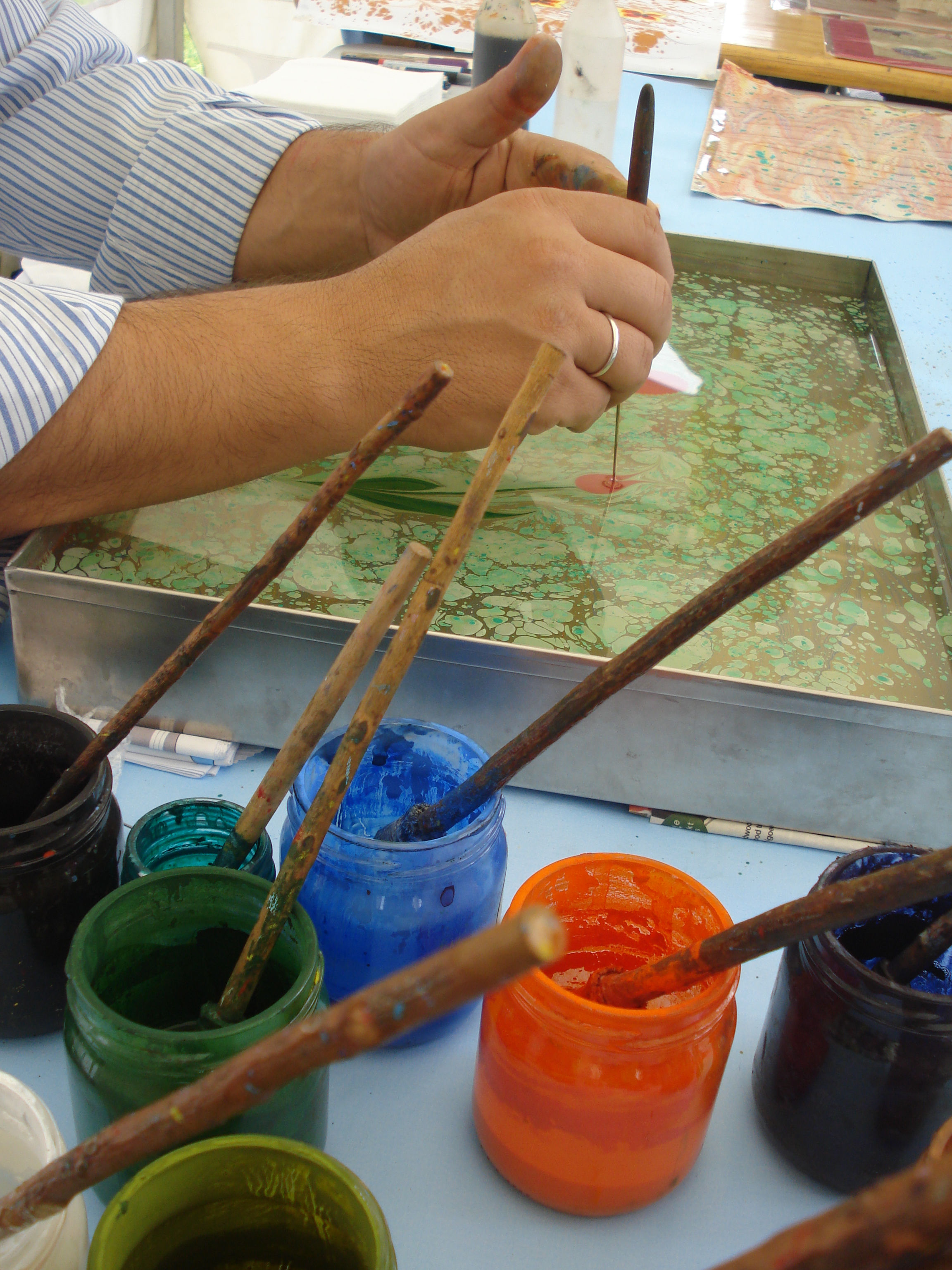
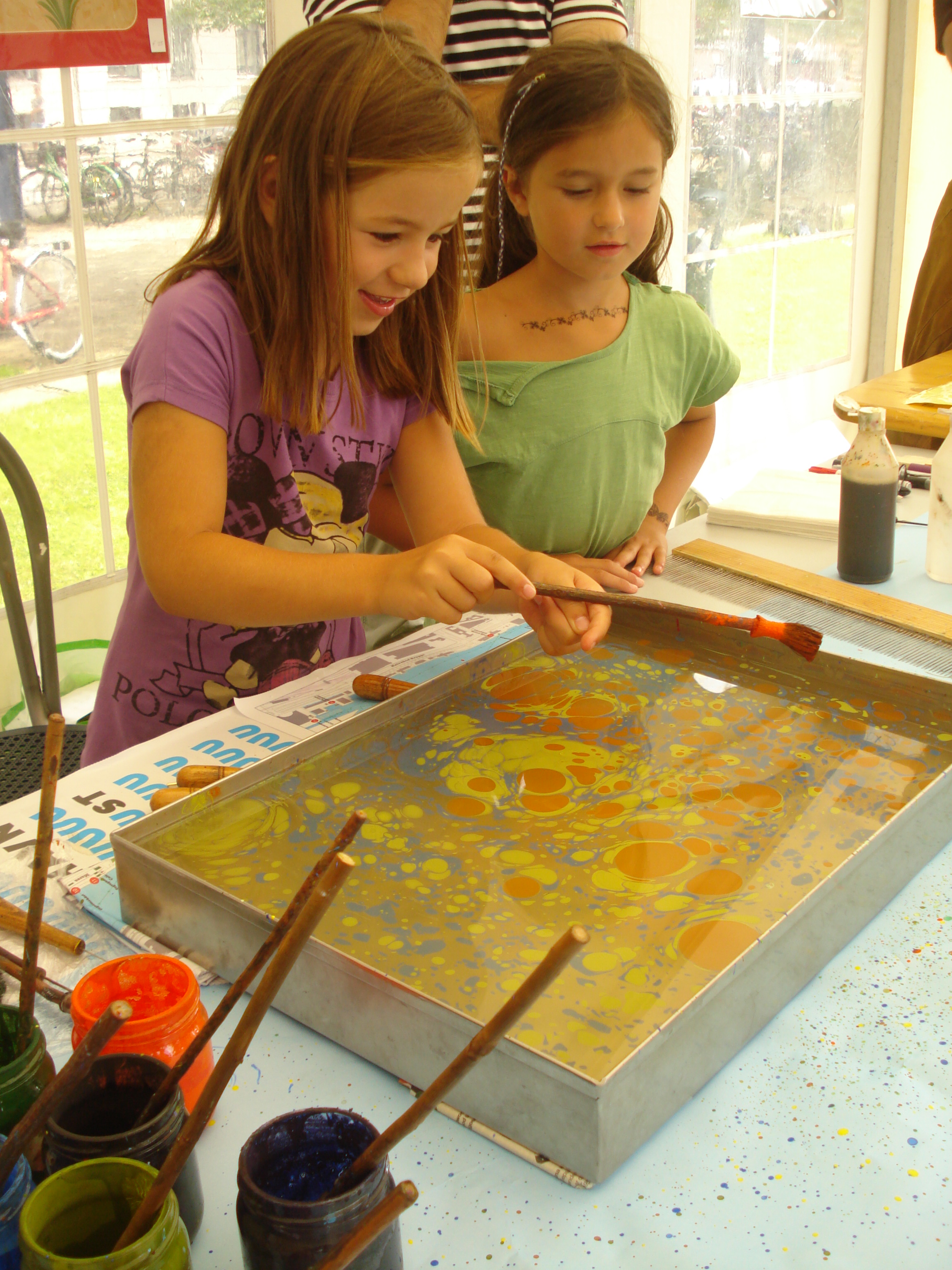
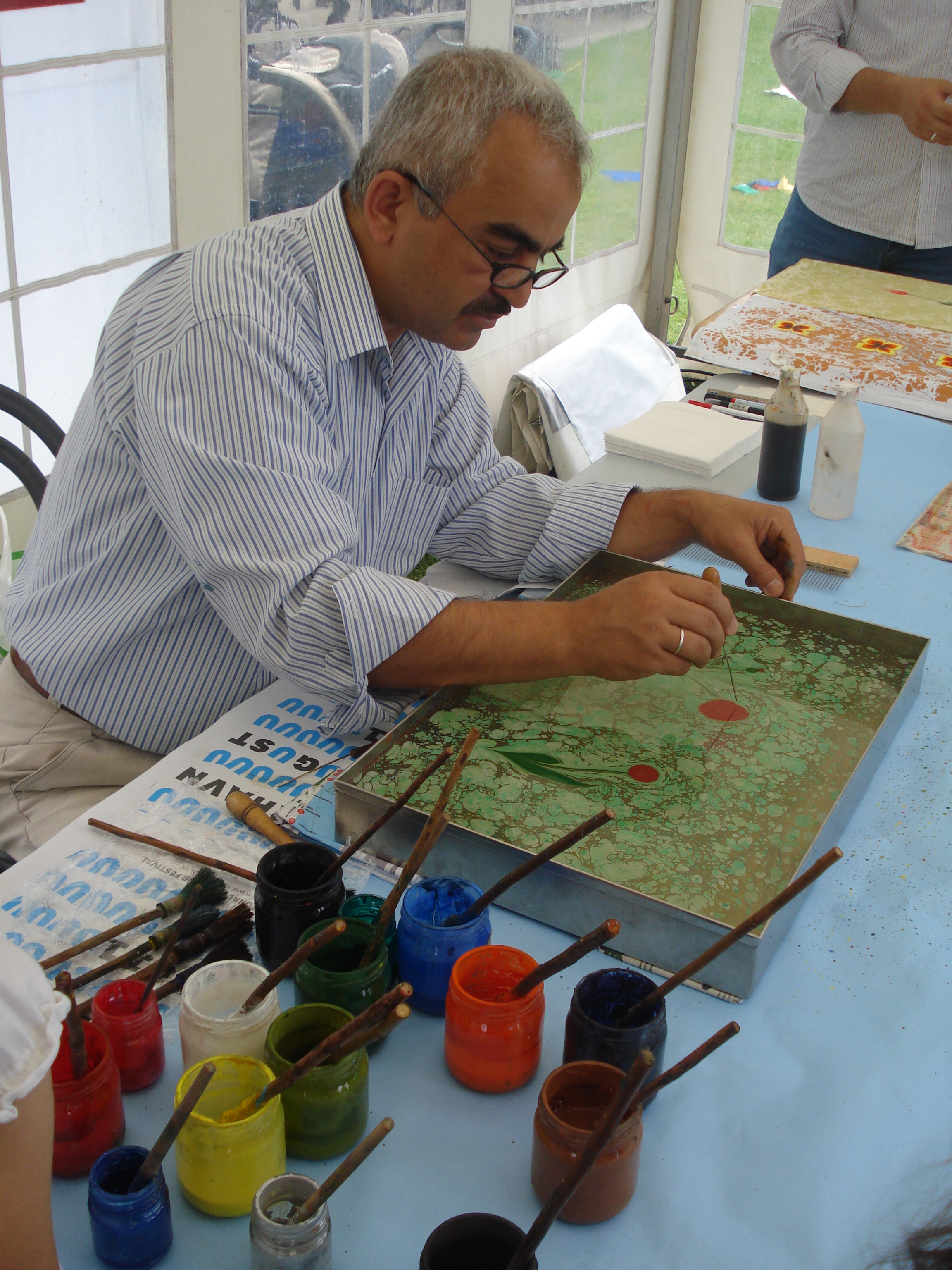
Of all the activities, I enjoyed the art of water marbling, Ebru, the most. The artist Dr. Mustafa Akdemir performed wonderfully during the display. Dialog Forum Copenhagen made it possible for the citizens to get to know the beauty, excitement and the importance of the water marbling art called ‘ebru’. It was especially important for me since the art of ‘ebru’ is an old art of Turkic countries for still being performed diligently by the art lovers.
Here is some information I want to share about this fantastic art:
The Art of ‘Ebru’
The Art of Ebru is one of the oldest Turkish paper decoration arts. The word “ebre” is the first known name of art of the art and means “aqueous, grainy” in Chagatai Turkish.
The art first spread into Iran with Silk Road and it was named as “Abru” (water surface) or “Ebri” (just like cloud). Later on, the art has been named as “Ebru” since it spread throughout Anatolia with Turks. Known as “Marbling” in Europe today, Ebru was introduced to Europe with the name of “Turkish Paper” in 17th century.
In Turkey, besides in binding art, Ebru has been used as background and border in calligraphy. With increasing usage of calligraphy, the value of Ebru as background paper increased so much that it was framed even without the calligraphy.
Today, Ebru is considered as one of the abstract and plastic arts. Besides its visual grace, Ebru displays interesting beauty from macrocosm and microcosm, which is not clear to naked eye. Also, the therapeutic characteristic of Ebru is still an unquestionable reality to its philes.
History
It is not known exactly where and when art of Ebru started. However, there are some references indicating that Ebru was performed in the 13th century in Turkistan, Samarkand and in the 14th century in the Herat region of east Iran. Ebru, just like as paper, spread from the east to the west by way of Silk Road and other trade routes.
In the Ottoman time, many Ebruzens (‘marblers’ or the artists who perform Ebru) were trained. Then, Ebru was used as background image for state documents and official correspondence. The basic reason for its application in such papers was to prevent the falsification. The logic behind is the same as the use of complex designs on cheques, promissory notes and paper Money in our modern life.
Types of Ebru
A. Traditional Ebru
Traditional Ebru has the patterns mostly used by the masters in the known history of Ebru. Some of the main types of traditional Ebru are Battal, Gelgit, Taraklı, Bülbül yuvası.
1. Battal Ebru
This is the oldest pattern to be known. All the other patterns are derived from this design, so we can call this pattern the mother or the origin of Ebru designs. In the application of Battal Ebru, the sequence of the colors is determined according to the amount of gall in the color. The color with the least gall should be set first. It can be mono-colored or multi colored. Paints are dripped on the surface of the basin and then transferred onto the paper.
• Neftli (Turpentined) Battal
This style is obtained by sprinkling paints with some added drops of turpentine (preferably pine turpentine) onto a “Battal” background. It gives a wavy appearance.
2. Gelgit(Tidal) Ebru
First a “Battal” background is set down and designs parallel to the side of the basin corner are applied next (in other words, diagonally across the basin, starting in one corner) are set by means of a pick, needle or a bradawl. The distance between the parallel lines may vary: as thicker points will influence wider areas, this distance should be larger. The distance between thin points may be less. These parallel lines may be repeated several times in opposite directions using a special comb. Tidal lines can also be used diagonally.
3. Şal(Shawl) Ebru
First a “gel-git” pattern is set, and then another “gel-git” with wider tracks is made diagonally across the first design. These diagonal lines may be drawn in the form of “S” shaped figures.
4. Taraklı(Combed) Ebru
This pattern is obtained by working with a comb on a “gel-git” background, moving the comb against the direction of the first “gel-git” design. It is also possible to obtain different patterns using combs without using gel-git background.
5. Bülbül Yuvası (Nightingale’s nest)
A small “Battal” pattern is first set, and then spirals of 3-5 cm diameter are set from the outside towards the middle, or vice-versa. The same pattern may also be set on a “gel-git” or “taraklı” background. These patterns are made one by one using a bradawl, or in one shot by using a comb with thicker points or a special comb covering the whole surface of the basin. In the application of this pattern, the sequence of the colors is determined according to the amount of gall in the color. The color with the least gall should be set first. It can be mono-colored or multi colored. Paints are dripped on the surface of the basin and then transferred onto the paper.
6. Kumlu (Sandy)
The most beautiful sanded Ebru is obtained by using Lahore dye, a vegetable based pigment, mostly used with indigo. To obtain this pattern, the paint is dropped in the centre of the basin. The same process is repeated until all the surface of the basin is covered and the drops squeeze each other and start to crack. Another way of obtaining this pattern is to drop the paint from the one middle side of the basin to the other middle side. This style is frequently used by calligraphers as borders or rulers.
7. Double Printing Ebru
In this style, a new design of marbling is used on already produced and dried Ebru paper. If necessary, more than two designs can be made on the same paper.
8. Akkase Ebru (Stenciled Ebru)
This is a pattern obtained by making several imprints on the same background, and popular with calligraphers. The base consists of a “light Ebru” upon which the script is written using a special fluid prepared with Arabic gum applied with a reed pen or a brush. Thus the surface of the light Ebru is covered by the Arabic gum. After drying, another design using darker colors is applied on the same paper: the parts covered with Arabic gum will resist the second coat and will therefore display the script. The same technique may be applied using a stencil, and other substances can be used instead of Arabic gum (i.e. heavy gum tragacanth, silicone, several transparent glues etc.).
9. Hatip (Orator) Ebru
It consists of concentric shapes of several colors formed one inside the other and can be acclaimed as the foundation of flowery Ebru. First, one of the Ebru patterns is set as background. On this background equidistant circles of 2-4 cm diameter are set by using a bradawl or dropper. Generally, the first color is dark. Later, the second, third or even fourth color is set. Then the design is formed by using a fine point, needle or bradawl.
B. Flowery Ebru (Necmeddin Ebruları)
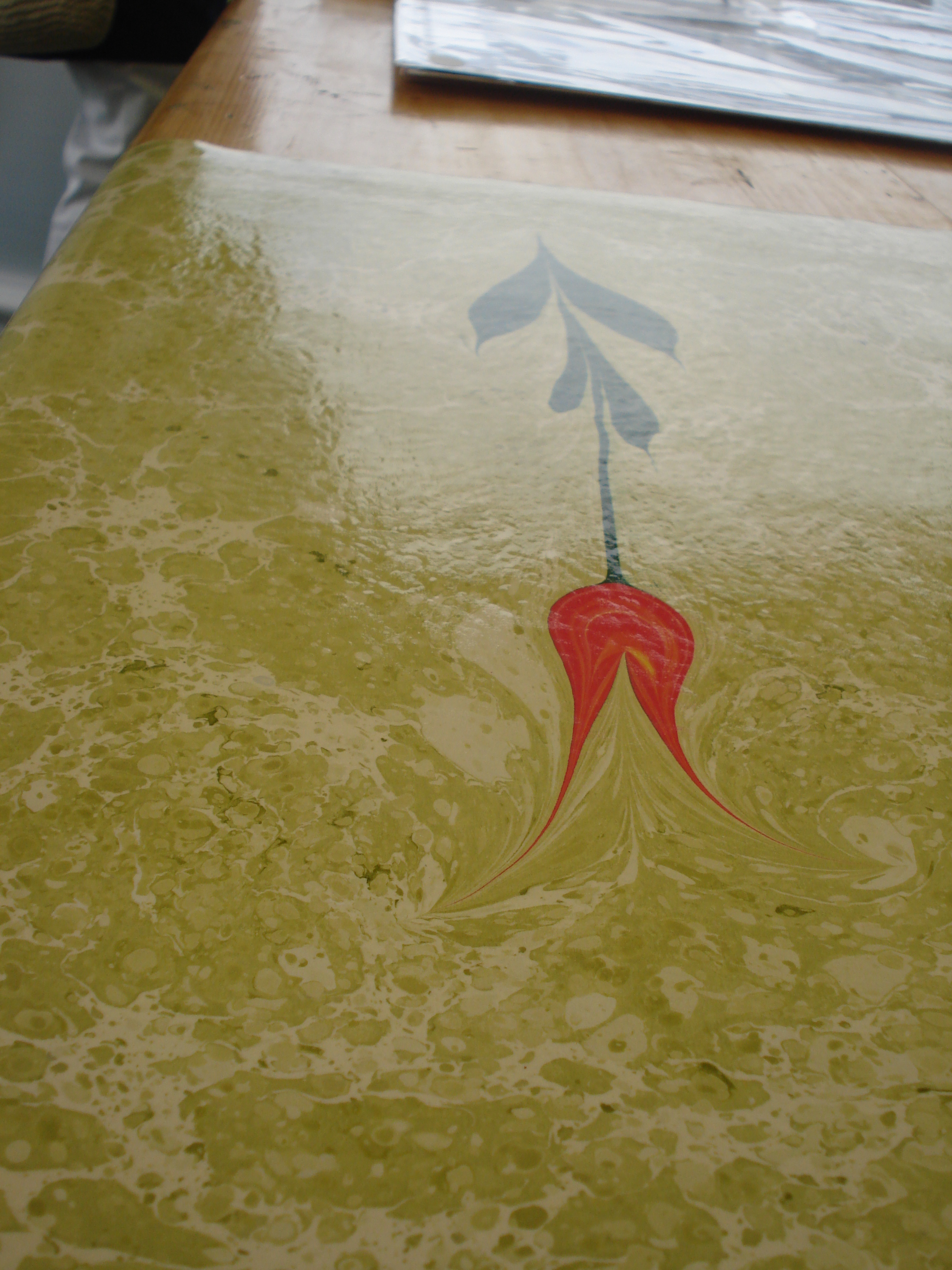
This style of Ebru is developed by the late master Necmeddin Okyay and is known by his name. This type of marbling has helped the art of Ebru to take place among other plastic arts. Any type of Ebru is set as background. Usually, a light colored Ebru pattern is chosen. On top of this base, the drops of paint are designed into the shape of leaves and flowers with the help of a bradawl. The flowers that have been generally designed are tulips, carnations, hyacinths, violets, daisies and roses.
Materials Used in Ebru
The materials used in traditional art of Ebru are explained below.
1. 1. Gum Tragacanth-Tragacantha:
Gum tragacanth is an organic glue formed in the stem of some plants belonging to the family of Astralagus Leguminosae. It particularly grows in Turkey, Iran, the Caucasus region and Afghanistan. In the preparation process, gum tragacanth is soaked in water for two days. The gum dissolution contains invisible particles which have not dissolved and therefore needs to be filtered through a fine cloth as it is poured into the basin.
2. Dyes:
Mineral pigments have been traditionally used in Ebru since very early times. These are natural dyes consisting of colored soil containing metal oxides or they are obtained from colored soil.
3. Brushes (Horsehair Rose branch):
Brushes traditionally used in Ebru are made of horsehair and rose branches. It is possible to control the amount of dye to sprinkle by using appropriate brushes with different thickness and length.
4. Basin:
The basin is the container where the water will be put. Its dimensions should correspond to the size of paper which will be used. The basin the depth of which may vary from 4 to 6 cm may be made out of wood or any kind of metal.
5. Water:
Water with low degrees of calcium, chlorine and lime and good quality potable waters are suitable for Ebru. Distilled water is the ideal one.
6. Paper:
Ideal papers are handmade, acid-free and absorbent papers, but these are very expensive and hard to find. Any kind of absorbent paper which is not lacquered or polished may be used in Ebru.
7. Gall:
The gall is a substance that the artist must best understand in the process of Ebru. It is the key material in Ebru. Gall lowers the viscosity of the base liquid and enables the paint to disperse on the water surface. Dyes without gall will sink to the bottom of the tray. It prevents the colors from mixing with each other and helps the dye to cling to the paper. Also, the gall enables the artist to make different shades of the same color.


 Ramazan Dicle
hi.
at the moment i’m doing my thesis about marbling. can i get the link or references that you referred about ebru in this post.
thank you.
hi, I was wondering if you know a place in Copenhagen where I can learn ebru?
There is a one starting at Dialog Forum in København on Friday 22 Feb 2013. Check out its webpage here in the link: http://dialogin.dk/
Btw, I will be there too as I am the one who organizes the whole event.
See you there
Ramazan